

Cerebral Success, the brain-supplement brand that landed a deal on Shark Tank in 2014, shut down in October 2019. The company’s net worth today is effectively zero — no active website, no product on shelves, no revenue. That answer surprises people who remember the deal with Barbara Corcoran and the brand’s rapid expansion into more than a thousand GNC stores, but the supplement market proved far harder to survive than to enter.
The more interesting story is what happened to the person behind it. Founder Trevor Hiltbrand has since built and led two subsequent companies, including one that has raised $23 million in venture funding.
The Shark Tank Deal and What It Was Worth
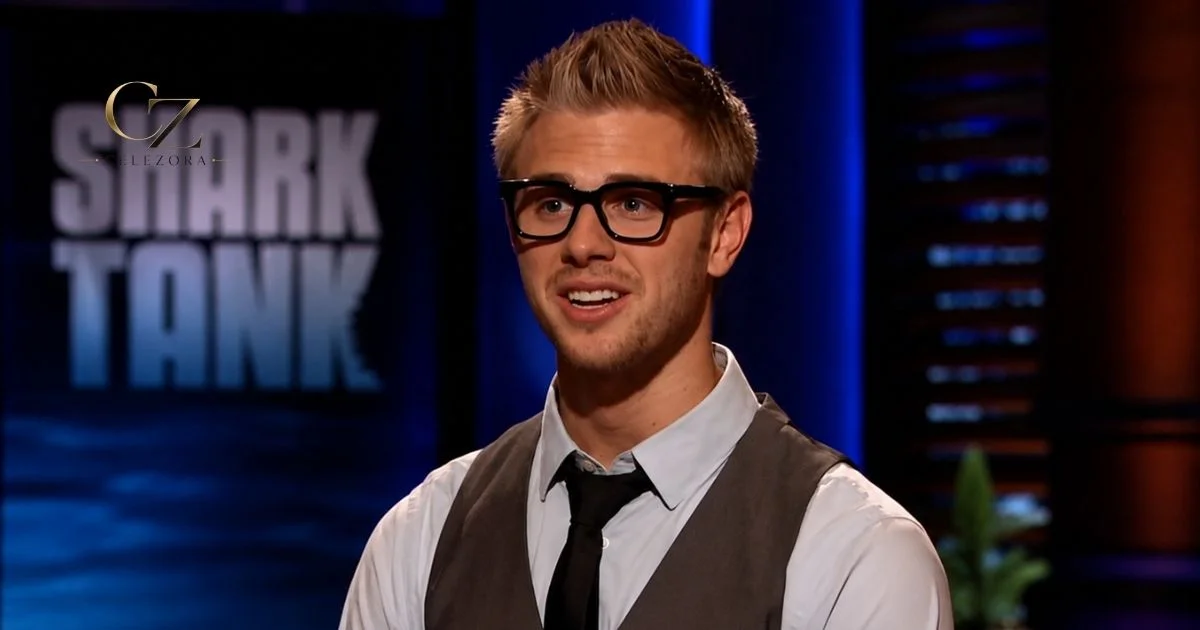
Hiltbrand appeared on Season 5, Episode 26 of Shark Tank, which aired on April 25, 2014. He walked in asking for $75,000 in exchange for 20 percent of his company, putting his own valuation at $375,000. At that point he had sold roughly 900 bottles at $70 apiece, generating about $60,000 in total revenue. Each bottle cost around $10 to produce.
The pitch was rough. Hiltbrand dressed up as a college professor in a gimmick that fell flat, and he openly admitted he had no clinical data on his proprietary blend — only research on individual ingredients. Daymond John questioned his credibility. Mark Cuban called the product unethical, arguing it encouraged students to skip sleep. Robert Herjavec called the revenue “dirty money.” Kevin O’Leary saw no moral problem but didn’t see a return.
Barbara Corcoran was the outlier. She offered $75,000 for 40 percent, with a condition that Hiltbrand obtain product liability insurance. He tried to negotiate her down to 37 percent; she refused. He accepted. The deal valued Cerebral Success at $187,500 — half of what Hiltbrand had asked.
Corcoran later explained her reasoning in a LinkedIn article titled “Spotting a Winner on Shark Tank,” writing that she “saw young Trevor for who he was — a kid who knew the prevalence and danger of college kids popping un-prescribed Adderall pills to get them through their exams. And he had a solution.”
From GNC Shelves to SmartX
The deal with Corcoran closed, and her retail connections paid off quickly. By October 2014, Cerebral Success had landed in GNC stores nationwide — its first entry into brick-and-mortar retail after selling exclusively online and through Amazon. A PRWeb press release from that month announced the GNC rollout alongside a small in-house study claiming SmartX increased processing speed by 12 percent and memory recall by 13 percent after seven days.
Hiltbrand rebranded the product from Cerebral Success to SmartX, redesigned the packaging, and repositioned it toward a broader audience of working professionals alongside college students. Online sales had quadrupled the night the Shark Tank episode aired, according to a Nutraceuticals World profile from November 2014. Corcoran even featured Hiltbrand at her entrepreneur retreat in Cabo San Lucas during Shark Tank’s seventh season.
For a stretch, it looked like a genuine success story. The product sat in more than a thousand stores, online sales had spiked, and the brand had a recognizable Shark Tank pedigree behind it.
Why Cerebral Success Went Out of Business
Hiltbrand closed Cerebral Success in October 2019, according to the Shark Tank Blog, which tracks deal outcomes. PitchBook records the company’s “out of business” date as February 28, 2022, though this likely reflects a formal corporate dissolution rather than the end of actual operations.
No single public statement from Hiltbrand explains the closure in detail. The most commonly cited factors across reporting and industry commentary are the intense competition in the nootropics market, where dozens of brands make nearly identical claims about focus and memory; the difficulty of maintaining shelf space at a major retailer without strong repeat-purchase rates; and the absence of robust clinical evidence distinguishing SmartX from cheaper alternatives.
The broader pattern is familiar to Shark Tank watchers. A national TV appearance generates an enormous short-term spike in awareness and sales, but the spike is not self-sustaining. In supplements especially, where barriers to entry are low and consumer loyalty is thin, surviving beyond the initial wave requires either deep scientific differentiation or a marketing budget large enough to outshout the competition. Cerebral Success had neither.
The “$21 Million Net Worth” Claim
Several websites list Trevor Hiltbrand’s personal net worth at $21 million. No verifiable source for that figure could be located for this article. It does not appear in any interview, financial filing, or reporting from an established outlet. The number seems to have originated on a single Shark Tank recap site and been copied across others without attribution.
What can be documented is Hiltbrand’s subsequent business activity, which suggests he has done well financially — but pegging an exact personal net worth is not possible from public sources.
What Trevor Hiltbrand Did Next
After winding down Cerebral Success, Hiltbrand did not leave the supplement industry immediately. According to his LinkedIn profile, he founded Transparent Labs around mid-2015 and ran it through January 2020. The company, a fitness supplement brand built around full-label transparency and clinically dosed formulas, grew to more than $30 million in sales during his tenure, per his own LinkedIn account.
His current venture is Project Solar, a direct-to-consumer solar panel company he co-founded with Matt Smith. According to Project Solar’s website, Hiltbrand’s frustration with opaque pricing and aggressive sales commissions in the solar industry — he was quoted installation prices of $40,000 to $60,000 for a system he eventually installed himself for about $9,000 — led him to start the company in 2020. Project Solar raised a $23 million Series A round, announced in a September 2022 press release via PR Newswire. The company claims to operate in 33 states and to have saved customers over $46 million compared to industry-average pricing. Hiltbrand serves as CEO and is based in Lehi, Utah.
A 2021 Forbes profile described Project Solar’s ambition as becoming “the Warby Parker of renewable energy.”
Cerebral Success Net Worth: The Company vs. the Founder
The company Cerebral Success is worth nothing. It is defunct, with no assets, no revenue, and no operating business behind the name. Anyone searching for “Cerebral Success Shark Tank net worth” should know the brand itself has a net worth of $0.
The founder’s trajectory, however, runs in the opposite direction. Hiltbrand took the distribution experience and marketing instincts he developed during the Cerebral Success era into Transparent Labs and then Project Solar, both of which grew substantially larger than the supplement that first put him on television. The Shark Tank deal valued his company at $187,500. Within a decade, he was running a solar company with $23 million in institutional backing.
More BLogs : Tara Leigh Cobble Net Worth
Sources: Shark Tank Blog | PRWeb | Nutraceuticals World | PitchBook | PR Newswire
